
Author name: zayashafeek792@gmail.com

Digital Marketer, Uncategorized

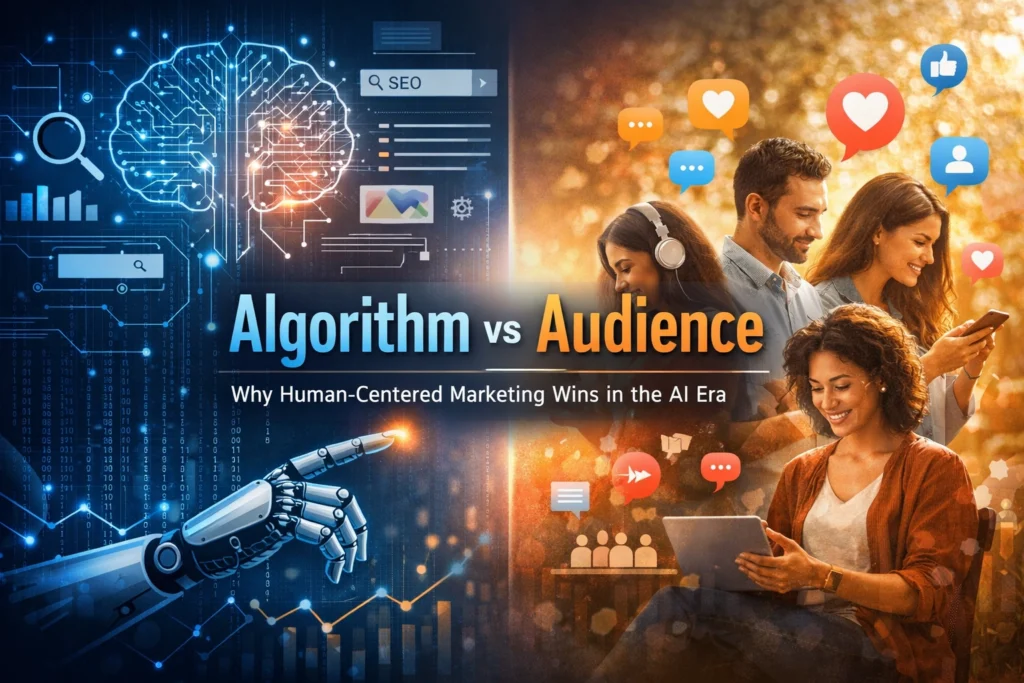
Algorithm vs Audience

Algorithm vs Audience: Why Human-Centered Marketing Wins in the AI-Driven Digital Era In digital marketing, there are many buzzwords, and few are as loaded as algorithm. Digital marketing consultancies dissect an algorithm, adjust to it, and sometimes obsess about it. Whether it is Google’s search algorithm or a social networking site, an algorithm is regarded as the biggest decision-maker of success in cyberspace. But here’s a reality that experienced marketers know: Algorithms don’t build brands.People do. In a world where automation and artificial intelligence are revolutionizing the distribution of content, realizing where the true power of competition exists, between algorithmic and human patterns, is what will determine success. A successful approach to digital marketing is not algorithmic and deeply focused but is centered on value. Understanding What Algorithms Really Are Fundamentally, algorithms represent the process of interpreting data to determine predicted outcomes. When it comes to digital marketing, algorithms examine millions of cues to determine which content should be displayed. These cues include: Engagement metrics (likes, comments, shares, watch time)Engagement Search Intent and Relevance Learn English Journal Content quality Authentic and Consistent Patterns of Behavior that Belong to the The main aim of an algorithm is not rewarding the marketers. The main aim is improving the users. The existence of an algorithm is basically due to noise reduction and giving users what they are looking for. It is a very important point that is often neglected by marketers. The Problem With Algorithm-First Marketing When marketers focus only on “beating the algorithm,” the result will frequently be a short-term approach to their online brand development that will end up doing more harm than good in the long term. Developing content purely based on trends rather than strategized planning Posting frequently without purpose Prioritizing reach over relevance Ignoring the brand voice and authenticity Imitation of competitors instead of originality These methods might temporarily give a brand a lot of attention, but the end result is rarely a building of trust and loyalty. “The algorithms shift and adjust all the time, whereas brand perception is constant.” Pursuing algorithms without a comprehension of customer needs results in mixed messages, a confused brand persona, and customer exhaustion. Algorithms Are Shaped by Human Behavior One of the most important insights in modern digital marketing is this: Algorithms develop based on the manner in which humans interact with the internet. They learn from: What users click The duration they remain What they skip What they share What they return to This means that algorithms will not control human actions, but human actions will train algorithms. As audiences consume valuable, relevant, and authentic information, algorithms pick up on this value and magnify it. This explains why human-centric marketing is naturally aligned with the success of algorithms. Rather than asking: “What does the algorithm want?” Smart marketers ask: “What does my audience genuinely need?” Human-Centered Marketing in an AI-Driven World Human-centered marketing practices put people instead of platforms first in every marketing plan. It centers on these factors: Intent Recognition Solving Real-World Problems Communicating with empathy Building Emotional EmpathyIn Establishing a Trust Relationship Artificial Intelligence and algorithms facilitate this approach by working with data to enhance efficiency, but they don’t substitute the human element that comprehends emotions, culture, and context. Reach is improved by technology. Impact is produced by human insight. The Role of AI in Modern Algorithms Owing to the development and emergence of AI-based platforms, algorithms are now smarter and more adaptable. These algorithms are empowered by AI because it makes them: Predict user preferences Personalize content distribution Process gigantic data sets in real-time fashion Enhance the Precision of Recommendations Optimizing Performance Automatically However, there is still a reliance on input for AI. It never comprehends the values of the brand, ethics, or emotional nuances. Amplification of that which already exists occurs. This means that poor strategy amplified by AI is still poor strategy—just faster. Algorithm-Friendly Content Starts With Value Many marketers believe that writing for algorithms means compromising creativity. In reality, the opposite is true. High-performing, algorithm-friendly content that is well-indexed over time has the following features: Simple structure and readability High intent alignment Authentic voice Consistent messaging Meaningful insights As long as the content is valuable in a human way, the algorithm will reward the content organically by virtue of improved engagement and distribution. “The key is alignment—not manipulation.” Trust: The Most Powerful Algorithm Signal In today’s digital age, trust is the greatest currency. The users are inundated with automated content, advertisements, and AI messages. What catches their attention here is the authentic one. Successful brands emphasize: Consistency Transparency Expertise Reliability Algorithms are now increasingly using behavioral data, such as repeat visits, engagement depths, and audience loyalty, to establish trust. “In short, trust is becoming the definitive ranking factor.” Why Algorithms Can’t Replace Strategy “Algorithms may optimize their run times, but they may not determine the direction in which They cannot: Restricts Long-term goals Understand Brand Positioning Assess ethical issues Build emotional storytelling Create compelling stories These responsibilities lie with the marketers. AI and algorithms are tools, powerful tools, but strategy is a human task. Algorithm Awareness versus Algorithm Obsession “The most effective digital marketers have algorithmic awareness, not algorithmic obsession.” What does algorithm awareness mean? Grasping the content distribution of platforms Making the format and structure suitable Having information about key developments What is meant by algorithm obsession Constantly changing direction Loss of consistency of the brand Chasing metrics without meaning The difference is in balance. What This Means for Businesses Today Businesses want more than visibility; they want healthy growth. But the marketing strategies that rely only on algorithmic concepts fail to offer them this. Business strategies incorporating human focus and algorithm alignment will result Create a stronger brand identity Build loyal audiences Enhance conversion quality Adapt to platform changes Ensure Credibility in AI-Driven Sectors This is a future-proof strategy. Why This Topic Helps Strengthen a Portfolio Writing about algorithms from a human-centered perspective instantly positions you as a strategist rather than
Digital Marketing

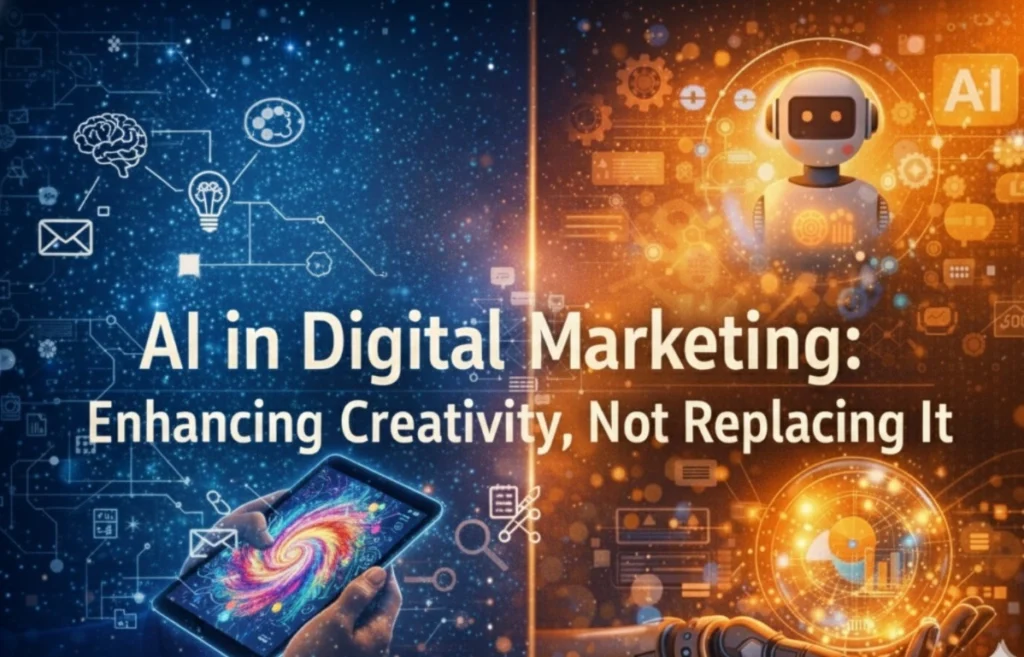
AI in Digital Marketing

AI in Digital Marketing: Enhancing Creativity, Not Replacing It Artificial Intelligence is one of the most popular trends in online marketing today. Ranging from creating content to data interpretation to automation processes to personalization techniques, AI applications are revolutionizing the marketing community. With advancements taking place in AI technology, there is one question that often comes to mind. Can AI technology replace creativity in online marketing? The simple answer is no. Instead of replacing creative thinking, AI is actually augmenting it—to make the marketing industry more efficient, more strategic, and more effective at providing valuable experiences. The strength of AI in digital marketing comes not only from automation but also from what it enables human capabilities to accomplish. The Rise of AI in Digital Marketing Data has always driven digital marketing. Over the years, marketeers have been able to analyze information, monitor trends, and make adjustments. AI follows this process in many additional ways, as it is able to analyze huge amounts of information at speeds and in accuracy levels unimaginable in human capacity. Current applications of AI involve various aspects of online marketing such as: Content generation and optimization:This Audience Targeting And Segmentation Predictive Analytics Email Marketing Automation Ad performance optimization Social media scheduling and analytics These capabilities enable marketing professionals to concentrate more on creative and decision-making efforts and less on repetitive ones. Why the Fear of AI Replacing Creativity Exists The fear about AI pertains mostly to a misinterpretation of the place it holds. As AI can produce images, texts, videos, and even music, there has been a fear that it can do everything. It is not able to think, feel, or imagine like a human being. AI is based on data and patterns that already exist. AI generates nothing out of emotion, experience, or intuition. Furthermore, creativity in marketing campaigns is a very human thing—it is based on people and culture and stories and emotions. AI is just a tool that assists in that process. The truth is, AI is a creativity assistant, not a creativity replacement. How AI Improves Creativity in Digital Marketing One of the most significant benefits of AI is automation. Activities such as data analysis, reporting, keyword research, A/B testing, as well as scheduling, can be easily done with the aid of AI-infused tools. Aided by the reduced time spent on repetitive tasks, the marketer will have more room to: Brainstorm New Ideas Craft brand stories Emphasis on Visual Storytelling Create messages that are not merely A marketer who is bogged down with manual and time-consuming tasks cannot think creatively. The big risk with creativity is when it’s not backed by data. AI bridges the gap between creativity and performance through its actionable insights. These tools analyze: User behavior patterns || || – Measures of Content Engagement Conversions Trends Audience PreferencesThere This information assists marketers in knowing what works and what doesn’t with their audience. Rather than speculating, creative briefs are now based on information, giving way to better, more effective campaigns. 3. Personalized Content at Scale Personalization has become the “only option in digital marketing.” Consumers have come to expect a brand’s understanding of their personal needs and preferences. AI empowers a brand’s content without compromising on creativity. Tailor messages to specific groups of people Deliver personalized emails or ads Customize web content based on user actions AI is responsible for both logic as well as message transfer, whereas creativity is done by humans. Machine learning tools can be used to do the following Writing content ideas Creating Outlines Recommending headlines Seo optimization of content However, the final content must also retain the human element. The need for creativity in: Add Brand Voice Create emotional connections Ensure Authenticity Remain original The AI system speeds up the processes of creation, while the human element ascribes meaning. AI and Visual Creativity Areas such as graphic designing or video editing have seen the usage of AI tools on the rise. AI tools assist in the following ways: Resizing & Image Enhancement Auto-editing of videos Color correction Template Generation Instead of substituting designers, AI enables them to test and refine their ideas and concentrate on higher-level strategic direction. This is because the human designer determines the concept, look and feel, and storytelling. The Importance of Human Creativity in AI Marketing Although there has been remarkable development in technology, a human mind is an irreplaceable source Emotional Intelligence Cultural awareness Ethical judgment Thinking strategicallyOverall Artificial inteligence cannot comprehend emotions or brand values like a marketing expert. A computer cannot experience excitement, empathy, or inspiration. These are basic requirements for establishing brand relationships. Effective online marketing involves storytelling, trust, and emotional connections, which come under the realm of human creativity. AI as a Strategic Partner, Not a Replacement The best marketers consider AI a strategic partner, not a replacement in a job. Rather than saying, “What about AI replacing me?” Ask yourself, “How can AI assist me in my work?” When used correctly, AI: Improves creative production Enhances efficiency Reduces Burnout Enables smarter decision-making Real-World Applications of AI-Enhanced Creativity Content Marketing The analysis of what topics work best is aided by AI, but the story and the message are written by humans. Social Media Marketing Artificial intelligence handles the posting and engagement tracking, and the marketer has to create engaging and authentic content. Email Marketing Personalization of delivery and timing is handled by AI, while copywriting is carried out by creative individuals. Advertising Ad placement and targeting are now done efficiently by AI. Marketers are responsible for concept and visual development. In both instances, AI assists in creativity as opposed to replacing it. Reasons Why Businesses Need Human-Centered AI Marketing Authenticity has never been more prized by consumers. A brand that speaks to consumers only through automated content may well come to seem bland and unconnected. Authenticity is guaranteed with a human element. It’s the human element of marketing that the use of AI ought to accentuate, not eradicate. The companies that leverage AI efficiency together

SEO

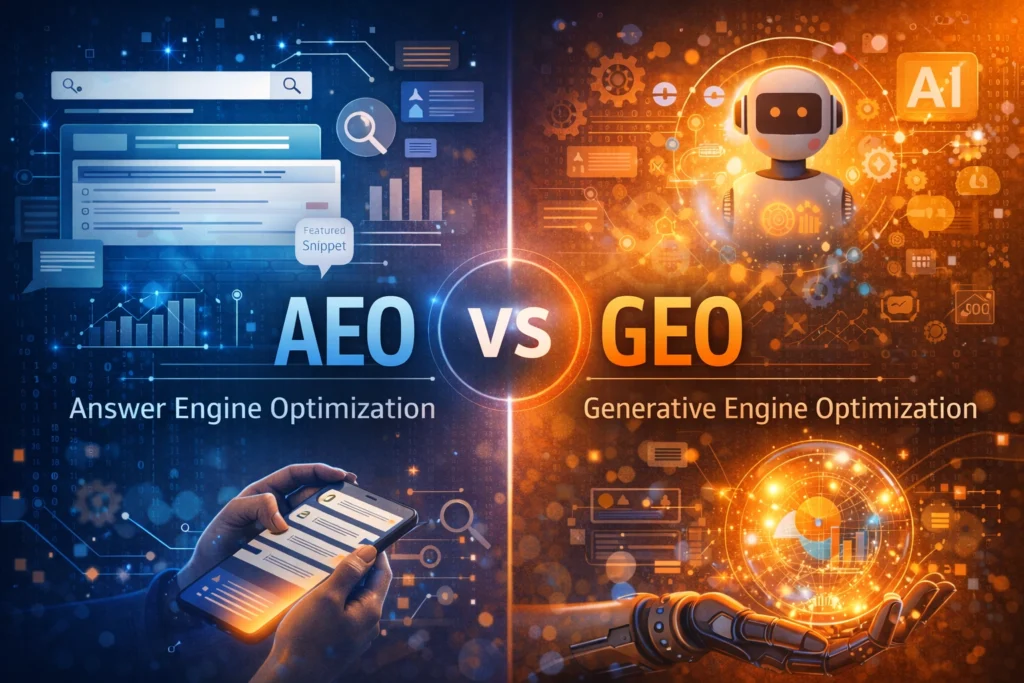
AEO V/S GEO

AEO & GEO: How AI Is Redefining the Future of Digital Marketing Search Digital marketing is changing at a pace we’ve never seen before. Not long ago, success online meant one thing—ranking on Google’s first page. Traditional Search Engine Optimization (SEO) was the foundation of online visibility, and keywords were the driving force behind most marketing strategies. But today, the way people search for information has completely transformed. With the rise of artificial intelligence, voice assistants, and generative search platforms, users are no longer limited to typing short keywords into a search bar. Instead, they ask full questions, speak to their devices, and increasingly depend on AI-generated answers to guide their decisions. Search has become more conversational, more intuitive, and more focused on instant solutions. This shift has introduced two important concepts that every modern digital marketer needs to understand: Answer Engine Optimization (AEO) and Generative Engine Optimization (GEO). Rather than replacing SEO, AEO and GEO build on it. They move the focus beyond rankings and toward how information is delivered and understood. The goal is no longer just to appear in search results, but to become the most relevant answer and a trusted source within AI-driven platforms. For brands and marketers who want to remain visible, credible, and competitive in this new digital era, adapting to AEO and GEO is no longer optional—it’s essential. Understanding the Shift from SEO to AI-Driven Search The old SEO was keyword-based, backlink-based, and ranking position-based. Although these aspects haven’t become obsolete yet, search engines are not simply search engines anymore. They’re fast becoming, or in some cases, already, answer engines and generative engines. These new platforms include the use of Google AI Overviews, ChatGPT, Perplexity, Bing Copilot, as well as voice assistants like Siri or Alexa; their goal is to provide answers rather than pointing towards relevant links for users. “This paradigm shift requires an entirely different method of content development—more focused on clarity, authority, and utility. That’s what AEO and GEO are for.” What Is Answer Engine Optimization (AEO)? Answer Engine Optimization, or AEO, refers to optimizing content so that answers to users’ questions are directly provided in a simple, straightforward, and structured fashion. While the purpose of SEO is merely to place a webpage on a results page, the purpose of AEO is to ensure that search engines and AI choose your content as the best possible answer to their users’ questions. “In essence, AEO is concerned not only with the word the user queried but also with the information the user wants to find out.” How AEO Works AEO works by aligning content with how search engines interpret questions and identify answers. Search algorithms now look for content that is: Clearly structured Easily understandable Directly responsive to a query Written in a natural, conversational manner. Typically, AEO-optimized content will: Question Headings (What, Why, How, When) Briefer, more specific answers, generally ranging from Bullet Points and Numbered Lists FAQ sections Schema Markup (Structured Data) Such structure enables the easy extraction of the most important information on the web page using web crawlers or algorithms of artificial intelligence.Typically, AEO-optimized content will Where AEO Appears AEO-driven content pops up in high-visibility placements like: Google Featured Snippets “People Also Ask” sections Voice search results AI-powered search summaries Not only that, but when your content rises to the top as an answer, it immediately gains authority and trust. AEO-Optimized Pages Typically Includes: Question-based headings (What, Why, How, When) Answer lengths of about 40 to 60 words List formats and stylesOrderedList and Bullet, FAQ sections Schema Markup/Structured Data Schema Markup/ This makes it easier for search engines and AI to rapidly identify the most important information. Where AEO Appears “AEO-driven” content is noticeable through prominent positioning such as: Google Featured Snippets “People Also Ask” sections Responses for voice searching Artificial intelligence-assisted search summaries When your content is chosen as an answer to a question, it gets instant credibility and trust. Why AEO Is Important There’s been a tremendous shift in the behavior of users. Today, users tend to search for their answers in a conversational manner; they tend to use full questions rather than typing a bunch of keywords together. For instance “What is digital marketing?” “How does SEO help small businesses?” “Which marketing strategy is best for local brands?” AEO makes sure that your answers are targeted to satisfy all of these types of searches. This enhances: Publicity Cred Click-through rates Brand authority• In a world with fleeting attention spans, the value of being the solution far exceeds that of simply being one of many search results. What Is Generative Engine Optimization (GEO)? Generative Engine OptimizationThe optimization of the content so that it can be identified, trusted, and utilized by the AI-based generative search engines when they generate answers is termed Generative Engine Optimization (GEO). Unlike conventional search engines that feature rankings of links, the purpose of the new engines is to provide generated replies through the combination of trusted sources. GEO insures that your content is one of those sources. How GEO Works In Generative AI, the evaluation of content written by humans follows a different pattern than in the process Expertise & Authority Context and depthContext Accuracy and clarity Original Insights Human perspectiveBecause GEO-friendly content does not contain keyword repetition or thin content. GEO-friendly content is more of the following Organized with a logical flow Authored by an individual with subject matter knowledge Replete with explanations, examples, and reasoning Updated & factually accurate AIs are designed to ensure that the best available understanding of a subject is provided to the user. If valuable information is provided, it is most probably going to be cited or summarized. Where GEO Appears GEO affects visibility in: ChatGPT answers Google AI Summaries Perplexity answers Bing Copilot summaries AI-powered recommendation engines In these situations, users do not click on any website. Instead, they use AI-driven explanations for everything. GEO is how you integrate your brand or expertise into this explanation. Why GEO Is Critical to the Future

Scroll to Top